
The Supreme Court has dismissed an appeal by Byju Raveendran, upholding the NCLAT's decision to reinstate the original Committee of Creditors (CoC) in Think & Learn Private Ltd's insolvency proceedings, which includes Glass Trust Company LLC as a major lender.

The Jharkhand High Court has given the state government two weeks to provide information on a missing minor girl from Gumla, warning that the case could be transferred to the CBI if no progress is made.
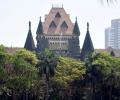
The Bombay High Court has referred to a larger bench the question of whether the state can deny furlough to prisoners convicted under special statutes like MCOCA and POCSO, citing potential violations of fundamental rights.

The Supreme Court has directed the CBI and Manipur SITs to provide copies of charge sheets in the 2023 Manipur ethnic violence cases to the victims and their families, ensuring legal aid and addressing concerns over investigation progress and victim support.

The Madhya Pradesh High Court has permitted a second postmortem of Twisha Sharma, a Noida woman who allegedly died due to dowry harassment. The family sought the second autopsy citing discrepancies in the first postmortem report.

Industrialist Anil Ambani has approached the Supreme Court seeking a court-facilitated debt resolution similar to the one provided to Sterling group's Nitin and Chetan Sandesara, and five other members of their families.

The Supreme Court has deferred the hearing on the CBI's petition challenging the suspension of Kuldeep Singh Sengar's life imprisonment in the 2017 Unnao rape case.
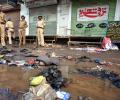
The Bombay High Court has discharged four men accused in the 2006 Malegaon blast case, overturning a special court order that had framed charges against them. The accused were charged under the Indian Penal Code and the UAPA.

The Punjab and Haryana High Court has ordered that Khadoor Sahib MP Amritpal Singh, currently detained in Dibrugarh jail, Assam, will appear virtually before a trial court in Amritsar for the 2023 Ajnala police station attack case.
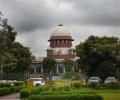
The Supreme Court of India has ruled that voluntary retirement is a distinct right of employees upon completion of the required years of service, clarifying the process and employer obligations.

The Supreme Court on Tuesday called on the Union government to enact a legal framework recognising paternity leave as a component of social security, stressing that caregiving responsibilities must be shared between both parents.

The Bombay High Court overturned the conviction and death sentence of a man in a 2017 rape and murder case, citing a violation of his fundamental right to a fair trial due to lack of legal representation. The court ordered a fresh trial, emphasising the need for a fair process for both the accused and the prosecution.
The Supreme Court has directed the CBI and Manipur SITs to provide copies of charge sheets in the 2023 Manipur ethnic violence cases to the victims and their families, ensuring legal aid and addressing concerns about the progress of investigations and victim support.
The Supreme Court has directed the CBI and Manipur SITs to provide charge sheets in the 2023 Manipur ethnic violence cases to the victims and their families, ensuring legal aid and covering travel expenses for court appearances in Guwahati.
The Supreme Court has directed the CBI and Manipur SITs to provide charge sheets in the 2023 Manipur ethnic violence cases to the victims and their families, ensuring legal aid and covering travel expenses for court appearances in Guwahati.
Three academics involved in drafting a controversial NCERT textbook chapter on corruption in the judiciary have approached the Supreme Court to defend their work, stating it was a collective effort and not the view of any single individual.

The Rajasthan High Court has reserved its order on Asaram's appeal against his conviction and life sentence in a sexual assault case. The trial court sentenced Asaram to life imprisonment in 2018. The High Court conducted hearings in a time-bound manner following Supreme Court directions.
The Punjab and Haryana High Court has overturned the death sentences of two men convicted in the 2019 rape and murder of a seven-year-old girl in Ludhiana, citing procedural errors during the trial.

The Supreme Court has stated it will not make structural changes to religious practices at the Bankey Bihari temple in Vrindavan, hearing a petition challenging administrative decisions affecting traditions.

The Supreme Court dismissed a petition related to the preliminary investigation report on the Air India plane crash in Ahmedabad, questioning the petitioner's motives and agenda.

The Jharkhand High Court has directed police to send a skeleton found in Bokaro to the Central Forensic Science Laboratory (CFSL) in Kolkata for further examination in connection with a missing woman case. The court also addressed concerns about the investigation's handling and the suspension of police personnel.

The Supreme Court has refused to entertain Congress leader Pawan Khera's plea seeking protection against possible coercive action until April 20 in a case lodged against him for levelling allegations against Assam Chief Minister Himanta Biswa Sarma's wife.

The Enforcement Directorate has accused West Bengal Chief Minister Mamata Banerjee of obstructing its investigation into a Rs 2,700-crore coal smuggling case, alleging she used state machinery to halt a search of an I-PAC office in Kolkata.

JCD Prabhakar of the TVK party has been unanimously elected as the Speaker of the Tamil Nadu Assembly. Chief Minister C Joseph Vijay emphasised the Assembly's role in transforming public expectations into effective policies and laws.

The Twisha Sharma dowry death case has seen significant developments, including the arrest of her husband and a court order for a second autopsy by AIIMS Delhi. The family alleges dowry harassment, while the in-laws claim drug addiction.

The Supreme Court of India has stated that the time has come for a Uniform Civil Code (UCC), while hearing a plea challenging the Shariat law of 1937. The court suggested that the legislature should address the issue of discrimination against Muslim women.

The Supreme Court has ruled that borrowers are not entitled to a personal hearing before banks classify their loan accounts as "fraud" under RBI directions, clarifying that a written response to a show-cause notice and access to the forensic audit report (with redactions) are sufficient for natural justice.
The Calcutta High Court has granted conditional bail to Sudipta Sen, the main accused in the multi-crore Saradha ponzi scheme, after 13 years of detention. The court cited the right to a speedy trial and Sen's prolonged detention as key factors in its decision.

The Calcutta High Court acquitted a man sentenced to death by a sessions court, citing significant procedural errors and lack of corroborating evidence. The court also acquitted 18 others who had been sentenced to life imprisonment in the same murder case.

The Supreme Court has directed the CBI to investigate contracts awarded to Arunachal Pradesh CM's family, prompting criticism from the Congress party.
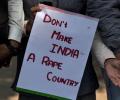
The Jharkhand High Court has taken suo motu cognisance of the alleged rape and murder of a 12-year-old girl in Hazaribag, Jharkhand, prompting an investigation and protests.

The Allahabad High Court has quashed a magistrate court's order rejecting a woman's plea for her husband's income and property details in a domestic violence case, ordering a fresh review and emphasising the importance of income disclosure in such cases.

The Madhya Pradesh government has challenged the legal validity of a 1935 order from the former Dhar princely state concerning the religious status of the Bhojshala Temple-Kamal Maula Mosque, arguing it cannot be considered law.

The Bombay High Court has upheld a lower court's decision to frame murder charges against eight police officers in connection with the 2014 custodial death of Agnello Valdaris, citing inconsistencies in police records and evidence of custodial torture.
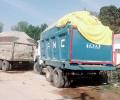
Police have arrested the main accused in the death of a forest guard who was allegedly crushed by a tractor-trolley during an operation against illegal sand mining in Morena, Madhya Pradesh.

The Supreme Court of India has expressed concern over the continued prevalence of domestic abuse and crimes against women, highlighting that these issues are symptomatic of a deeper societal problem rooted in patriarchy, despite economic and legal advancements.

The Supreme Court of India has directed the central government to establish a no-fault compensation policy for individuals who experience serious adverse events after receiving a COVID-19 vaccine.
The Supreme Court has criticised Haryana Police and Gurugram's Child Welfare Committee for their handling of a three-year-old's rape case, ordering a special investigation team and a fair probe.

The London High Court has rejected Nirav Modi's petition to reopen his extradition case, citing the Indian government's assurances regarding his treatment in India as a key factor in their decision.

The Punjab government has filed a plea seeking the continued detention of MP Amritpal Singh in Dibrugarh jail, Assam, citing security concerns. The High Court dismissed Amritpal's plea challenging his detention under the National Security Act.
